
THE MIDDLE EAST
Morality, Progress, Freedom

Morality
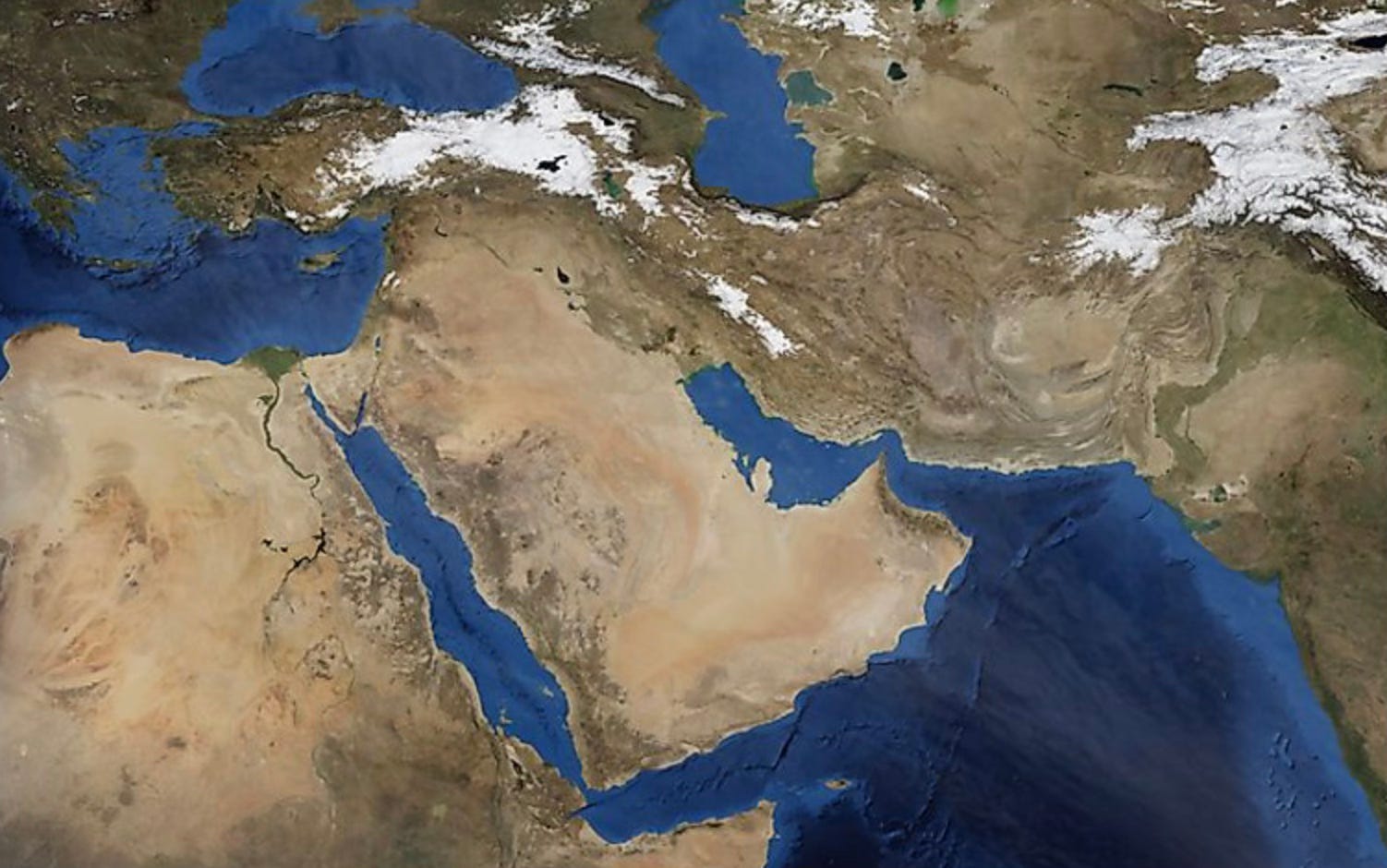
Let’s begin by defining the concepts in the title. The Middle East is a geopolitical concept. It refers to a geographical area that nowadays consists of a number of sovereign nation-states and some disputed territories. Which countries to include in the Middle East is not always clear, but there is wide consensus that the countries of the Arabian Peninsula and the Levant, as well as Turkey, Egypt, Iran, and Iraq, are part of the Middle East. The Palestinian, Kurdish, Southern Yemenite, and other disputed territories also belong to the Middle East. Morality is a concept that refers to people’s notions and ideas of right and wrong, good and bad, appropriate and inappropriate, inoffensive and offensive, etc. Moral notions and ideas are evaluative. They are about values and about approval and disapproval. The concept of progress defines a movement towards something that is better, preferable, more desirable. As such it is evaluative as well. For example, not legalising slavery is considered better than legalising it. For the current context, I define freedom in accordance with Amartya Sen’s and Martha Nussbaum’s theoretical model of human capabilities and human development. Fundamental human capabilities include the capability to live a healthy life of normal length (avoiding premature death), the ability to preserve one’s bodily integrity, to be able to affiliate with others, to play and laugh, to participate economically and politically, and so on. Freedom allows an individual to develop her capabilities. In a liberal democracy, freedom is the most basic value, the protection of which is the organising principle of society.
Living in the Middle East since 2017—first in Lebanon, thereafter in Jordan—I have been confronted with the realities of life in this region. None of the countries in the Middle East is democratic and liberal—except for Israel. In none of these societies—again, except for Israel—is there a tradition of the common good. Instead, these are household-centred societies, in which the individual’s moral worth derives from his or her group membership. Family and tribal affiliations place the individual in a grid of collective identities and relationships. Therefore, it is imperative to avoid harming the reputation and standing of the group—family, community, tribe—that one belongs to. The group functions as prison for the individual: she or he cannot escape the group’s identity and reputation, but the group also provides a safe haven for the individual. The world outside the group is threatening. It is filled with risks, challenges, and temptations. Outside the walls of the household lies what quickly can turn into enemy country. It is an alien zone that belongs to nobody. A highly visible sign of this situation is the fact that public areas outside people’s homes are littered with waste. In places like Jordan, an army of street sweepers in light-green uniforms tries to keep up with people discarding all sorts of refuse (but the wind will still blow waste everywhere).
Morality in the Muslim-majority countries of the Middle East is group-centred. On one hand, the family, community, and tribe must be defended as the seat of benevolence and righteousness. On the other, the faith in principle includes all Muslims. But only the most pious believers would put the good of the Ummah before the good of the family. Nevertheless, it goes without saying that the global community of Muslims is considered morally superior to all other human beings. In the Middle East, this community tends to be contrasted with the other two Abrahamic religions, Judaism and Christianity. While Christians may be tolerated, Jews are designated enemies of God. From an early age, Muslim children learn that Jews are unclean like pigs and ridiculous like monkeys. In Arabic and Iranian schoolbooks, Jews are portrayed as treacherous and depraved. Anti-Semitism is instilled from a young age and reproduced daily in the Arabic and Iranian Middle East. The result is that most people I have met in Lebanon and Jordan are convinced that the world is ruled by Jews and that everything from a lack of tap water to rising prices and social unrest should be blamed on Jews in Israel and the US. In Europe, where the Muslim Brotherhood has managed to exert a disproportionate influence, I have heard educated and uneducated Muslims express the same anti-Jewish views as in the Middle East. Muslim hate preachers in the mosques, on TV, and in other media repeat anti-Jewish conspiracy theories, thereby fanning the flame of anti-Semitism across the Middle East and beyond.
Israel
The normalisation process of the 2010s that goes on still has led several Arabic countries to officially recognise the state of Israel. The default position of Muslim-majority countries has otherwise been to deny the existence of Israel and to disavow its right to exist. Egypt and Jordan were the first Arab countries to establish diplomatic relations with and thus recognise Israel. In 2020, Bahrein, Morocco, Sudan, and the United Arab Emirates recognised Israel. Next in line is Saudi Arabia, which, as the site of Islam’s most holy places, possesses great symbolic capital in the Muslim world. To derail the normalisation process and discourage Saudi Arabia and other Muslim-majority countries from normalising their relationship with Israel, Iran ordered its proxies in the Middle East—Hamas, Palestinian Islamic Jihad, Hezbollah, and the Houthis—to attack Israel. Iran remains the largest threat against peace in the Middle East. Its closest allies in the region, Syria and Iraq, lack the military capacity and reach to threaten Israel the way Iran can and does. Iran is in turn supported by Russia, North Korea and, more indirectly, by Turkey and Qatar. By being the major sponsors of the Muslim Brotherhood in various parts of the world, Turkey and Qatar aid and abet Iran’s proxies, Hamas and Palestinian Islamic Jihad, both of which are part of the Muslim Brotherhood.
The elites of countries like Jordan, the United Arab Emirates, and Saudi Arabia—that is, of countries that are under threat from the Muslim Brotherhood—realise that there is much to be gained from normalising and strengthening ties with Israel. Economic growth is one aspect of this. While Arab countries might benefit from their extraction economy—Jordan considerably less than Saudi Arabia and the United Arab Emirates, of course—they generally are deficient in the economic growth factor of intellectual capital, i.e., creative individuals, innovations, high-quality research and development, etc. Why this is so has to do with the aforementioned group-orientation that limits the development of individual creativity. The rigid and widespread religiosity in these Muslim-majority countries stifles the freedom of thought and expression. While Israel also has religious minorities that stand in the way of economic growth and social progress, they are unable to reduce the intellectual capital that is an important motor for Israel’s economy. The other aspect of the normalisation process is that it marginalises Iran and the Muslim Brotherhood in the Middle East. The mass protests that took place in the Middle East in the wake of the Israel-Hamas war were usually organised by the Muslim Brotherhood (in Jordan) or some Shiite faction (in Lebanon and Iraq). If the normalisation process results in economic growth and improved lives in the Middle East, the appeal and influence of these groups will dwindle.
Progress
Social and moral progress is not likely to automatically flow from economic growth. For this to happen, the individual needs to be liberated from her dependence on a particular group and loyalty to a closed belief system. Depending instead on the universal rights provided by an impersonal, neutral state sets the individual free and enables her to make autonomous life choices. It also permits her to engage in self-expression and intellectual exploration. In many places, urbanisation and higher education have created open spaces, both socially and culturally, in which individuals could outgrow their social background and gain greater autonomy. Social, political, and moral progress usually began in such open spaces. The anonymity of the city, for example, provided fertile ground for universalist ideas that no longer were tied to group identities and affiliations. While Christian apologists like to claim that universalist ideas are part of the Christian tradition, they forget that this tradition distinguished between adherents of the one true faith, Christianity, and those who cling to false beliefs or, worse, who are heretics and non-believers. Universalism that only applies to the members of a certain group is not universalism.
For universalism to evolve into a guiding principle, there had to be a radical break with religion, caste-like social divisions—serfs, peasants, craftsmen, aristocrats, kings—and with the notion of an unchanging divine order. The radical wing of the Enlightenment was atheist, feminist, anti-colonialist, liberal, and democratic. Their ideal is epitomised in the saying that often is attributed to Denis Diderot, but for which there is no historical record: ‘Men will never be free until the last king is strangled with the entrails of the last priest’.
It took until the nineteenth century for technological, scientific, and moral progress to burst the chains of religion and monarchy on a wide scale. Scientific theories and findings invalidated religious core beliefs—think of cosmology and the theory of evolution. Urbanisation led to the growth of a socially, politically, and economically influential bourgeoisie. Traditional moral norms and values clashed with social evolution, as can be seen in the vast literature dealing with the moral dilemmas and social conflicts in bourgeois circles. With ever more people—labourers, women, colonial subjects, social minorities—demanding equal rights, many (but far from all) societies underwent drastic changes. After the Second World War, when a post-war generation reached adulthood in Europe and North America, moral progress was turned into a political programme, and: the private was now political as well. Women’s liberation, as it was called, swept across many parts of the world. Children’s rights became a new issue. The persecution and demonisation of minorities came into view, for example in the public discussion of how homosexuality was defined either as a crime or a disease. Moral progress cured many of these social ills. But not everywhere.
As can be seen in photos from the 1960s and 1970s, quite a few women in the Middle East adopted the style of their sisters in Europe and North America. Short skirts and dresses, women’s uncovered hair, women dancing and smoking, and so on, could all be seen in Cairo, Teheran, Beirut, Istanbul, and Damascus. The backlash, ‘the revolution of the reaction’ (to use Mussolini’s label for his fascist movement), came in the 1980s. In the United States and the United Kingdom, it was orchestrated by wealthy conservatives. In the Middle East it was organised by islamist sects. The ‘revolution of reaction’ in Iran encouraged groups like the Muslim Brotherhood to fight moral progress in Muslim countries. Not that such groups faced massive resistance in religious societies like Jordan, Iraq, and Yemen. In Turkey and Lebanon, the reactionary struggle against moral progress took longer because atheism and urbanism had developed to a point where it was difficult to root them out. Saudi Arabia and the United Arab Emirates never experienced a society-wide period of moral progress in the 1960s and 1970s. It is curious to witness how moral progress is being made now in a few areas like higher education and business careers in these countries. It is worth repeating, however, that in religious and group-oriented societies like Saudi Arabia, the UAE, Oman, Kuwait, and Bahrein—all of which have the economic resources for social, political, and moral innovation—self-perpetuating economic progress with the help of intellectual capital is not possible as long as minds and lives remain unfree.
Freedom
The ideology of individualism is often portrayed as being a fundamental feature of the United States, not least by Americans themselves. The US being a vast country with rural, urban, and suburban areas populated by people at different stages of human development, for example when it comes to education, health, and income and indebtness, the level of actual individualism varies greatly. If by individualism we mean a person’s entitlement to, free and independently, develop her own capabilities, individualism is limited if the person lacks the necessary means to understand and realise her capabilities. Those necessary means consist of proper nutrition and safe shelter, education, health, sufficient disposable income, and societal inclusion. The freedom to independently develop one’s capabilities is thus contingent on certain provisions. A minority of Americans are able to access those provisions without getting in debt, which limits their freedom and independence. This is attested to by the fact that a recent survey found that 40% of Americans could not cover a surprise expense of USD 400. More and more households in the US live from pay cheque to pay cheque. In short, many, if not most, Americans lack the means for individualism.
In contrast, Scandinavian countries, with their welfare state model, provide the means for individualism. Never having to fear that the ground will be pulled from under their feet, Scandinavians are free to independently develop their capabilities. This does not mean that all Scandinavians make use of this opportunity. Refugees and migrants from illiberal and group-oriented societies, for example, have a harder time taking advantage of the education and potential for social inclusion that is available to them. A 2019 survey—unfortunately only available in Swedish—found that migrants to Sweden from Iran, Iraq, and Turkey appreciate that their lives have improved economically since they arrived in Sweden. They also value that their political freedom is greater in Sweden than in their countries of origin. As far as social values are concerned, however, a majority of them remain conservative. They think that gender equality has gone too far in Sweden. Their views on homosexuality, sex before marriage, divorce, abortion, and prostitution are characterised by intolerance and prejudice. Such views are not typical of middle-class refugees who fled the theocratic regimes of Iran and Iraq, or who migrated from the increasingly illiberal regime of Turkey.
In the Middle East, the welfare state model never arrived. The safety net for the individual is still the family, community, clan, tribe, etc. Individualism, in the sense of individual freedom, is therefore difficult to achieve for most Middle Easterners. The rich and powerful of the region can afford to go their own way, although they, as patrons of less rich and powerful, are expected to fulfil the responsibilities of noblesse oblige. The vast majority of people in the Middle East—once again, with the exception of Israel—are unable to develop their capabilities, which is why even the top oil producing countries of the Middle East—Saudi Arabia, Iraq, UAE, Iran, and Kuwait—do not rank higher than they do in the Human Development Index. For Middle Eastern countries with limited or no revenues from oil production, the status of human development in terms of long and healthy life, knowledge, and decent standard of living, is even worse.
Freedom, both in the sense of being able to develop one’s capabilities and in the political sense of having rights such as the freedom of expression, is largely absent in the Middle East. Only Israel is a relatively free society. Just as in an increasing number of countries, however, freedom is threatened in Israel as well. In the theocracies, monarchies, and autocracies of the Middle East, freedom remains a dream and, for some, an aspiration.
Clear, concise and worrying.